


Accessibility and language tool guide
Skip to content
Leeds Community Healthcare NHS Trust Logo
Careers Contact Us
  • Home
  • Our services (A to Z)
  • About us
    • Access to information
    • Equality and diversity
    • Research
    • Awards
    • Infection prevention and control
    • Clinical and medical education and training
    • Board of directors
    • Working in partnership
    • Safeguarding children and adults
    • Charity
    • Sustainability
  • News
  • Join our team
    • Why work for us?
    • Flexible staff
    • Newly qualified graduates
    • Vacancies
    • Apprenticeships
    • Working and living in Leeds
  • Patient experience and engagement
    • Compliments, comments and complaints
    • Your feedback and experience
    • Person-centred care
    • Get involved
    • Thinking about using a camera or other equipment to monitor someone’s care?
    • Help to access and attend your appointment
    • About Me project
  • Contact us
    • Plan your journey
    • Location finder
    • Press and media enquiries
Skip to content
Leeds Community Healthcare NHS Trust Logo
  • Home
  • Our services (A to Z)
  • About us
    • Access to information
    • Equality and diversity
    • Research
    • Awards
    • Infection prevention and control
    • Clinical and medical education and training
    • Board of directors
    • Working in partnership
    • Safeguarding children and adults
    • Charity
    • Sustainability
  • News
  • Join our team
    • Why work for us?
    • Flexible staff
    • Newly qualified graduates
    • Vacancies
    • Apprenticeships
    • Working and living in Leeds
  • Patient experience and engagement
    • Compliments, comments and complaints
    • Your feedback and experience
    • Person-centred care
    • Get involved
    • Thinking about using a camera or other equipment to monitor someone’s care?
    • Help to access and attend your appointment
    • About Me project
  • Contact us
    • Plan your journey
    • Location finder
    • Press and media enquiries
Leeds Community Healthcare NHS Trust Logo
/Our services (A to Z)/0 to 19 public health integrated nursing service (0 to 19 PHINS)/Oral health/Oral health for babies and toddlers (0 to 3)
Hero Banner Background

Oral health for babies and toddlers (0 to 3 years)

This page is for parents and carers of babies and toddlers. It explains how to look after young children’s teeth, how to brush, when to see a dentist, and how to limit sugar to protect their teeth.

Toddler brushing their teeth.

Toothbrushing

When to start brushing teeth?

Start brushing your baby’s teeth as soon as their first tooth appears. This helps them learn that toothbrushing is part of their daily routine.

How often should I brush my babies teeth?

Brush your baby or toddler’s teeth twice a day:

  • Before bed (most important)
  • One other time during the day

Toothpaste and fluoride
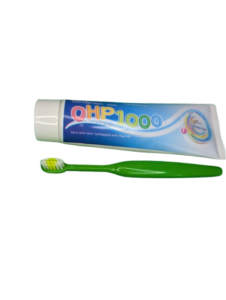
  • Use toothpaste with at least 1000ppm fluoride.
  • For babies and children under 3, use only a tiny smear of toothpaste.
  • Make sure your baby does not eat or lick toothpaste from the tube.
  • Do not rinse their mouth after brushing. This keeps fluoride on their teeth and helps protect them.
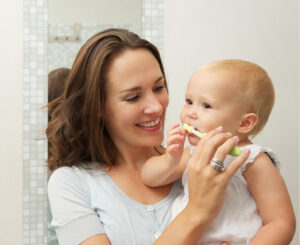

Supporting information

  • Use a small, soft toothbrush designed for young children.
  • Sit your baby on your knee with their head against your chest to help you reach their teeth.
  • For toddlers, try brushing while standing or sitting behind them and gently supporting their chin.
  • Make brushing fun:
    • Sing toothbrushing songs
    • Listen to children’s brushing music
    • Watch brushing videos
    • Use a toothbrushing app for children
  • Brush in small circles, covering all teeth and gums.
  • Let your baby hold their toothbrush too so they get familiar with it.
  • Brush your own teeth at the same time to show them it’s something everyone do

Useful resources

  • CBeebies: Morning routines brushing teeth (fun videos for young children)
  • BBC Tiny Happy People: Tips to help with toothbrushing and daily routines

Sugar can harm teeth, so it is important to limit sugary foods and drinks. Also try to limit how often sugar touches your child’s teeth.

Before 6 months

Your baby should have only:

  • Breast milk
  • Infant formula

From around 6 months (when starting solid foods)

  • Avoid foods containing added sugar.
  • Limit how often sugary foods or drinks touch your child’s teeth.

Important guidance

  • Do not dip dummies in anything sweet.
  • Babies under 12 months should not have honey (it contains sugar and may contain harmful bacteria).
  • Bottles should only contain breast milk or formula.
  • From 6 months, start moving your child to a free-flow, non‑valved cup instead of a bottle.
  • If your child needs medicine, ask for a sugar-free option.

Visit the Healthier Food Swaps (NHS) page for simple, everyday food swap ideas.

  • NHS dental care is free for all children under 18.
  • Take your child to the dentist when their first tooth appears, or by 12 months old.
  • You can also take them to your own dental appointments to help them get used to the sights and sounds of the dentist.

Why regular dental visits matter

Visiting the dentist from a young age helps because:

  • children learn what happens at the dentist, which helps them feel less worried as they grow.
  • dentists give helpful advice on brushing, fluoride, and caring for your child’s teeth.
  • problems can be spotted early, including the first signs of tooth decay.
  • preventing problems now reduces the chance of pain, infection, or treatment later on.

Making dentist visits a positive experience

Try to keep appointments calm and friendly.

  • Bring your child to your own appointments if possible. Watching what happens helps children feel safer and more confident.

Tips to help children and young people feel comfortable

  • Use positive, simple language when talking about the dentist.
  • Play “dentist” at home using toys or teddies.
  • Read books or watch child-friendly videos about dentist visits.
  • Bring a comfort item like a teddy, blanket, or fidget toy.
  • Give a small reward afterwards, such as a sticker or a visit to the park.

A gentle, child-friendly video showing what happens at the dentist.

Visit the find a dentist page.

  • NHS: Looking after your baby’s teeth gives simple, trusted advice on teething, brushing your baby’s teeth, fluoride, toothbrushing tips, and when to take your baby to the dentist.
  • West Yorkshire Healthier Together: Oral Health includes practical tips, videos, and guidance for parents and carers.
  • Tooth Brushing Habit (songs, videos, and routines) has fun videos, songs, and games to help babies and toddlers enjoy toothbrushing. It supports parents to build good brushing routines in an engaging way.
  • Autism Tooth Care (support for neurodivergent children) offers sensory‑friendly brushing ideas and practical advice for autistic children or children who find toothbrushing difficult. It includes visual supports, routines, and step‑by‑step strategies.

Contact us

You can call our Single Point of Access (SPA) from Monday to Friday, 8:30am to 5pm.

  • Phone: 0113 843 5683

You can also keep up to date with our service and find more information on our Facebook or Instagram pages.

If you 11 to 19 you can contact us via ChatHealth.

Text a 0 to 19 specialist public health nurse on 07520 619 750

Relay UK: Free support to help deaf people and those who have hearing loss or have a speech impairment to communicate over the phone.

  • Your Feedback means a lot: Complete our Friends and Family Test
  • How can we help you access and attend your appointment?
  • How to use ReciteMe accessibility and language tool guide
  • Support with accessing digital

Contact us

You can call our Single Point of Access (SPA) from Monday to Friday, 8:30am to 5pm.

  • Phone: 0113 843 5683

You can also keep up to date with our service and find more information on our Facebook or Instagram pages.

If you 11 to 19 you can contact us via ChatHealth.

Text a 0 to 19 specialist public health nurse on 07520 619 750

Relay UK: Free support to help deaf people and those who have hearing loss or have a speech impairment to communicate over the phone.

  • Your Feedback means a lot: Complete our Friends and Family Test
  • How can we help you access and attend your appointment?
  • How to use ReciteMe accessibility and language tool guide
  • Support with accessing digital
survey icon
Tell us what you think

We would love to know what you think of our website and if there is anything we can improve.

Complete our survey and share your thoughts.

Leeds Community Healthcare NHS Trust Logo
Headquarters
Leeds Community Healthcare NHS Trust
White Rose Office Park, Building 3
Millshaw Park Lane
Leeds, LS11 0DL
Useful Links
  • News
  • Current vacancies
  • Contact us
  • Give feedback
Need to speak to someone urgently?
MindMate Website Logo MindWell Leeds Website Logo NHS 111 Logo
© 2026 Leeds Community Healthcare NHS Trust - Website by 6B
  • Accessibility statement
  • Privacy notice
  • Cookie policy
  • Terms and conditions
  • Policies and guidelines