
Advice for developing gross motor skills in neurodiverse children
Neurodiverse simply means the brain works and processes information differently from what is considered ‘typical’. It is not an illness or disease; rather, the ‘label’ recognises that everyone’s brains are different, and our brains affect how we experience the world around us and how we react to it.
Neurodiverse children may experience sensations differently, and discomfort during walking or physical activity may be difficult for them to recognise, describe, or locate. As a result, pain, fatigue, or sensory discomfort may be expressed through changes in behaviour, movement, or participation rather than words.
We hope this leaflet provides some information and advice to help you and your child understand how mobility can be affected by neurodiversity, and helps you with some activities to work on to develop movement skills.
How does neurodiversity affect physical skills?
Autism and similar neurodivergent conditions impact how the brain processes information. Common features that affect physical skills include:
- Sensory processing: Heightened or reduced sensitivity to lights, sounds, smells, tastes, or touch.
- Repetitive behaviours: Engaging in repetitive physical movements or vocal sounds (often called ‘stimming’).
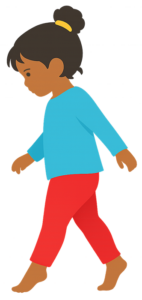
- Walking on toes: Distinct walking patterns including toe-walking and wider, slower strides.These variations are linked to differences in how the brain develops and processes sensory information.
When to seek intervention
Not all walking differences require correction. Support is typically recommended if the walking pattern:
- Causes physical pain, tightness or frequent tripping.
- Restricts the person’s ability to participate in physical activities or enjoy daily life.
Other useful information
Children can struggle with walking safely in the community for a variety of reasons. This can be overwhelming for neurodivergent children due to sensory overload, anxiety, and a preference for predictability.
Some key factors why this may happen
Sensory overload: The brain can become flooded by too much noise, light, or activity. Dropping to the floor instantly reduces the number of sensory inputs and provides a calming, solid anchor.
Meltdown or shutdown: When anxiety spikes or the brain is overwhelmed, it can force a fight, flight, or freeze response. Dropping to the floor is a physical sign of a freeze or shutdown, making the person feel safe and closed off from the world.
Pathological Demand Avoidance (PDA): Some individuals experience extreme avoidance of everyday demands and expectations, which can lead to a sudden freeze or drop response when a task is presented
General strategies

This may include:
- Using visual supports or maps to clearly outline the activities and route before leaving the house. Combine with ‘now and next’ planning to help your child know what to expect.
- Wearing noise-cancelling headphones to reduce auditory overstimulation.
- Go for a low pressure walk along the route you want to do as part of every day life. Pick a quieter time. Take time to allow your child to explore the route, looking, touching etc so that they know what to expect.
- Encourage your child to walk for just part of journeys, look for a safer or quieter section they can do more easily than others.
- Try getting your child out of the buggy when you are not quite at your destination so they can practice safe walking with you, and get a big cheer when they arrive where they need to be.
- Try leaving the buggy at home for short trips so your child can build up their ability to walk for longer.
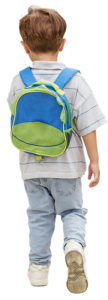
- Be prepared to go out: A backpack with 5% of the child’s body weight can give them feedback to their muscles and joints and sense of where they are in space. Weigh the backpack down with a small water bottle.
- Other items to have on hand can include: a change of clothing, squeezy or fidget toy, snack or chewy toy to help prevent anxiety and deal with the sensory overload on the journey.
- Encourage your child to be focused on something else, looking for colours, counting birds or cars.
- If your child cannot keep safely holding your hand when out, try reins or a backpack attached to reins and your wrist.

Many children walk on tip toes, and this can be a normal part of their development between the ages of 10 and18 months as they are learning to walk and balance. Some children can continue this up to the age of 6 to 7 years where it usually resolves naturally; however, a small number of children may continue to walk this way as they get older.

It is reported that around 1 in 5 children with autism walk on their tiptoes. There are several reasons a neurodiverse child may walk on their toes.
These include:
- Sensory difficulties
A neurodivergent child could experience anxiety or discomfort feeling certain areas of their feet touching the ground. Walking on toes gives a more intense feeling in the feet and calf muscles which may help a child feel more grounded and secure. - Vestibular difficulties
The vestibular system is the sensory network in the inner ear that has to do with balance, movement and coordination. Vestibular difficulty can cause the child to move their weight forward over their toes, encouraging toe-walking.
Should I be worried about toe-walking?
Walking on tip toes generally does not cause the child any pain or discomfort and it does not usually result in any type of deformity. Children can walk, run and jump on their toes without any problems as long as their calf muscles are flexible but they may tire easily.
What can I do about it?


- Encourage and remind your child to keep their heels down when standing and walking.
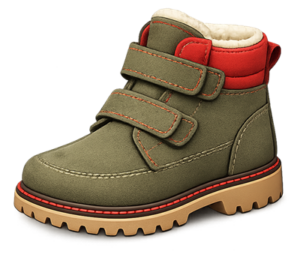
- Provide suitable supportive footwear
- High ankles shoes/boots fastened tightly will hold a child’s foot in the shoe and provide some sensory feedback to help them walk with their heels down.
- All children’s shoes should be fitted to correct length and width.
- Shoes with lights on the heels may be good prompts for heels down.
- Don’t worry if your child goes back onto tip toes when bare foot.
- Try activities which encourage a stretch of the calf muscles where heels are in contact with the ground:
- Games that encourage squatting with your child’s heels down.
- Penguin walking on their heels (with toes up in the air)
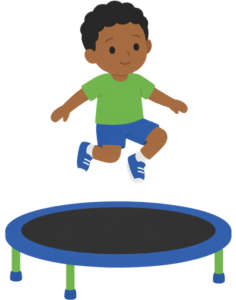
- Trampolining. Many trampoline parks offer SEN sessions in the local community with smaller group sizes and quieter environments.
- Stretches: These can help with flexibility while they are still growing.
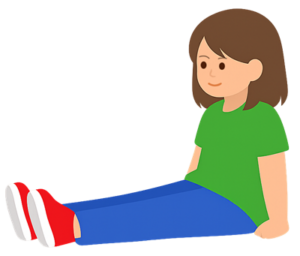
- Long sitting: Encourage your child to sit with their back against a surface and legs out straight. Aim to sit for 15 minutes. A stretch should be felt at the back of the leg.

- Heel stretch: Stand on a step or a large book with your heels over the edge. Slowly lower your heels down until a stretch is felt at the back of the leg.
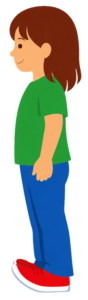
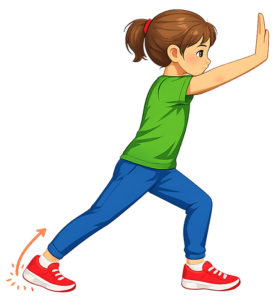
- Calf stretch: Stand with your arms on a wall and one leg in front of the other. Bend the front knee and keep the back leg straight. Make sure both heels are down. A stretch should be felt at the back ankle. Hold for 20 seconds and repeat three times on each leg.

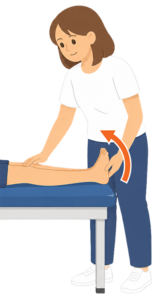
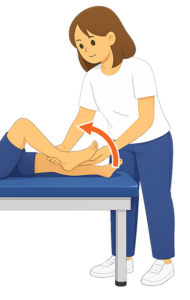
- Ankle stretch: Assisted ankle stretch with knee extended (a) and knee bent (b).


- Long sitting: Encourage your child to sit with their back against a surface and legs out straight. Aim to sit for 15 minutes. A stretch should be felt at the back of the leg.
Neurodivergent children sometimes fall over more often than other children. This can be linked to many reasons and is not always due to a physical problem. Instead, several related developmental differences can affect balance, coordination, and body awareness. Here are the most common reasons:
- Balance and vestibular differences.
- Motor co-ordination difficulties.
- Reduced proprioception.
- Low muscle tone.
- Attention and concentration difficulties.
Balance and vestibular differences
Neurodivergent children process signals from the vestibular system (the inner-ear system that controls balance and spatial orientation) differently.
- They may feel less stable when standing or walking.
- Quick head movements or uneven surfaces can make them lose balance more easily.
- Some children also seek movement (spinning, jumping), which can lead to more falls.
Common exercises
That may help improve balance and vestibular system include:

- Standing on one leg.
- Walking on balance beams or lines.
- Stepping over obstacles.
- Using balance boards or wobble cushions.
- These activities help the brain process balance signals more effectively, reducing falls.
Motor coordination difficulties
Some children have motor planning and coordination challenges:
- Difficulty co-ordinating arms, legs, and posture.
- Difficulty with activities like running, climbing, or changing direction quickly.
- Slower development of gross motor skills, and slower refinement of existing skills, for example, they can walk upstairs, but struggle to learn how to walk up in a more mature pattern, for example, one foot to a step, or without a rail.
- Difficulty working out the small stages of completing a whole movement or activity (motor planning)
This can make them trip or fall more frequently during play.
Exercises that can help
Includes:
- Running and stopping.
- Jumping and landing safely.
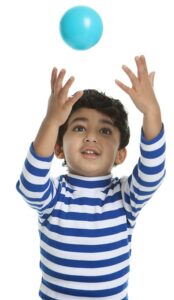
- Catching and throwing.
- Kicking balls.

Please see the below links for more ideas on how to develop gross motor skills:
Reduced Proprioception (body awareness)

Proprioception is the sense that tells your brain where your body is in space.
If this system works differently, a child might:
- misjudge where their feet are.
- step awkwardly.
- walk into things.
- lose balance more easily.
To improve proprioception, children who frequently fall may have reduced awareness of where their body is in space.
Exercises to help

This can include:
- Pushing or pulling objects.
- Wheelbarrow walking.
- Carrying weighted items.
- Crawling through tunnels.
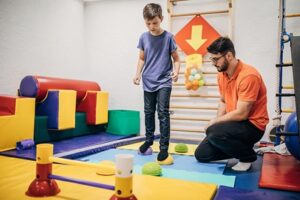
- Obstacle courses.
This improves the body’s feedback to the brain, helping children place their feet and move more accurately.
Low muscle tone (Hypotonia)
Some children with have low muscle tone, especially in core and hips, which means muscles are a bit less firm at rest and movement can be more effortful.
Signs may include:
- Slouched posture.
- W-sitting.
- Fatigue during walking or standing.
- More stumbling or collapsing to the floor.

A stronger core helps the child:
- stand upright.
- control movements.
- catch themselves before falling.

Exercises to strengthen muscles include:
- Bridging.
- Animal walks (bear walk, crab walk).
- Climbing.
- Squats.
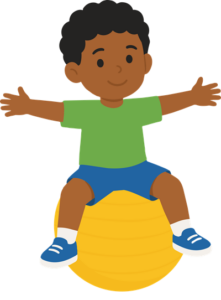
- Stability ball exercises.
- Trampoline.
Attention and sensory overload
Sometimes falls happen because the child is:
- focussed on a sensory stimulus.
- overwhelmed by noise or lights.
- not noticing obstacles while concentrating on something else.
- Lack of safety awareness.

In a quiet, calm environment, free from distractions we can try to teach safer movement patterns with lots of verbal prompts:
- walking slower
- walking around objects
- stepping over objects.
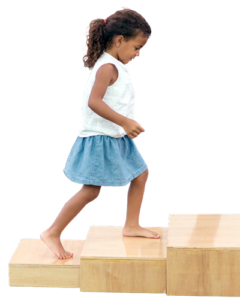
- practice going up and down stairs.
Practicing these activities in calmer environments may help improve their ability to complete it in their usual environment.