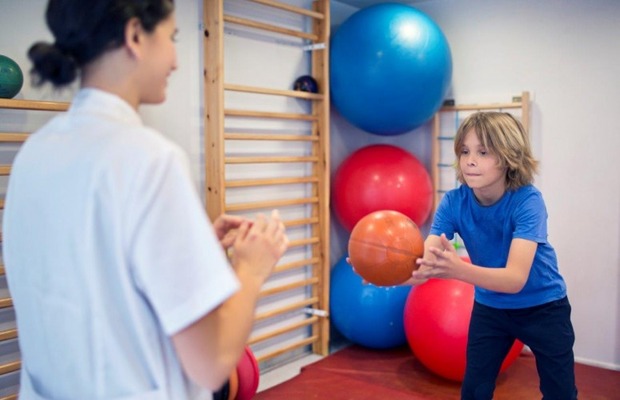
We support children with long term neurological or developmental conditions.
About the physiotherapy (ICAN) service
We work with children and young people aged 0 to 19 who have a long term neurological or developmental condition which impacts upon their movement and makes their daily participation in activities difficult. Some examples are; cerebral palsy, muscular dystrophies, developmental delay, developmental coordination disorders, syndromes.
We do not work with:
children with acute respiratory or acute orthopaedic conditions or injuries.
What we provide
Support for children and their families to support participation in everyday activities.
Specialist assessments and analysis of movement difficulties, and support on how to reduce possible future complications.
We also provide specialist treatment based on current evidence. This can include:
Specialist advice, information and training that can help physical skills be developed throughout everyday home and education setting routines by parents, carers and education staff.
Individual exercise or positioning programmes.
Specialist equipment and orthotics.
Specialist interventions, for example, hydrotherapy or rebound therapy.
Healthy lifestyle advice.
Specialist advice, information and training to children and young people, parents and carers, education staff and other healthcare professionals.
Referral information
Who can refer to the service?
Community paediatricians or some hospital doctors
GPs
Health visitors and other allied health professionals, for example, occupational therapists and speech and language therapists
Note
We do not accept new referrals from parents, however parents of children who have
previously been seen by our service can self-refer back to our service if needed.
We do not accept referrals from schools or school nurses.
Information to support patients including our service one minute guides on wheelchair skills for both powered and manual wheelchairs.
Physiotherapists work in all areas of the health service. Physiotherapists help to maximize function and movement when someone is affected by injury, illness or disability.
Some children’s physiotherapists work in hospitals and help children after an operation, illness or broken bones. Others work in the community and help children with longer-term problems or disabilities.