


Further information
Practitioner training
Boost your confidence in supporting children with speech, language and communication needs. Our Training team offers a range of practical, high-quality training sessions designed for practitioners working in early years, primary, secondary, and specialist settings. Whether you’re just getting started or looking to deepen your knowledge, our training will give you the tools to spot speech, language and communication needs early and make a real difference. Book your place today and feel more confident in supporting every child to thrive.
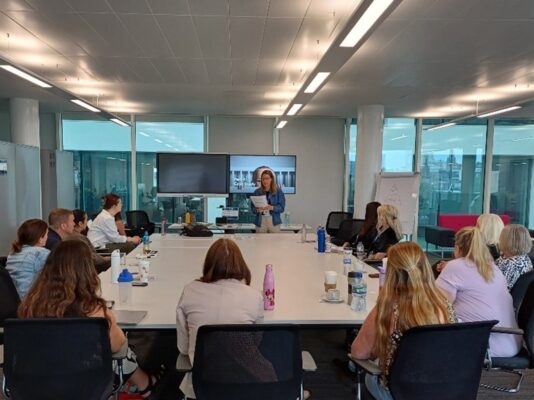
Our training offer
Leeds Children’s Speech and Language Therapy service provides a range of high-quality training packages that will enable you to identify and support the needs of children and young people with speech, language and communication needs in the early years, primary, secondary and specialist provisions.
Our aim is to develop your skills and confidence in implementing speech and language interventions, across individual, small group and whole school levels. As language and communication underpins all learning, emotional wellbeing and social interaction, these skills will facilitate your students to reach their full potential, academically and emotionally.
We also jointly run a post graduate certificate qualification in advanced practice in speech, language and communication needs with Leeds Trinity University. More information about this can be found below.
Practitioner training
We provide a variety of training courses in person or online. To book on to these courses, please see booking information on the left.
Understanding speech, language and communication needs (SLCN) and Using the SLCN screening tool across the ages.
These courses develop the practitioner’s understanding of speech, language, and communication skills and how to identify children with speech, language and communication needs (SLCN). Practitioners will be trained in how to use the Leeds SLCN screening tool, relevant to the age group that they work with, and how to identify the next steps in supporting children with SLCN in their setting:
- Understanding and screening for speech, language and communication needs (SLCN) early years: This course provides an overview of what is meant by the terms ‘speech’, ‘language’ and ‘communication’, how these areas develop and what can be done to support children in the early years with development of these skills. This also covers training on how to use the Leeds SLT screening tool.
- Understanding and screening for speech, language and communication needs (SLCN) primary: This course provides an overview of what is meant by the terms ‘speech’, ‘language’ and ‘communication’, how these areas develop and what can be done to support children in KS1 and KS2 with development of these skills. This also covers training on how to use the Leeds SLT screening tool.
- Understanding and screening for speech, language and communication needs (SLCN) secondary: This course provides an overview of what is meant by the terms ‘speech’, ‘language’ and ‘communication’, how these areas develop and what can be done to support children in KS3 and KS with development of these skills. This also covers training on how to use the Leeds SLT screening tool.
These sessions provide a more detailed insight into specific areas of speech, language and communication skills and provide evidence-based strategies and approaches to support language and communication development:
- Preverbal and non-speaking communication (Understanding and support): Suitable for early years and primary settings. Includes information and strategies to support pre-verbal children looking at support such as objects of reference, child-led interaction, developing communicative intent, creating opportunities for communication
- Social communication and interaction (Understanding and support): Suitable for primary and secondary schools. Includes strategies on verbal reasoning or inference skills, conversation skills and visual support
- Speech sounds (Identification and intervention): Suitable for primary schools. Covers development of speech sounds and strategies or interventions to support speech sound difficulties
- Visual support for speech, language and communication needs: Provides in introduction to why visual support is important for children with SLCN
These courses cover approaches that work best when they are embedded across a whole-school setting. These sessions teach the theory and implementation of the approaches, as well as demonstrating how they can be practically implemented across settings. We can also further support settings to fully embed the approach across their school through our consultation sessions:
- Colourful semantics: This course provides an understanding of Colourful Semantics at both basic and advanced levels, how and why it works, who it can be used with and how to implement the approach into the classroom or small group interventions
- Talk boost (KS1 and KS2): Talk Boost KS1 is a targeted intervention for 4 to 7 year old children with language that is delayed, including children in Reception classes. The programme is delivered in primary schools by classroom teachers and teaching assistants and provides a structured programme that boosts children’s progress in language and communication by an average of 9 to 18 months after a ten week intervention.
- Early talk boost (EYFS): Talk Boost is a targeted intervention aimed at 3 to 4 year old children with delayed language helping to boost their language skills to help narrow the gap between them and their peers. The programme aims to accelerate children’s progress in language and communication by an average of 6 months, after a nine week intervention. Teaching assistants and provides a structured programme that boosts children’s progress in language and communication by an average of 9 to 18 months after a ten week intervention. The training course trains staff to be able to carry out the intervention.
- Word aware: This is a structured whole school approach to promote the vocabulary development of all children. Focused on whole class learning, the resource is of particular value for children with DLD, SEN and those with EAL, but it will extend the word learning of all students.
- Creating a communication friendly classroom: This short course aims to give an overview of how the physical environment of the classroom can impact on children and young people’s speech, language and communication. It introduces practical strategies that can be introduced and embedded within individual classes or across a whole setting, to enable a good communication environment and support attention and listening, language, communication, and behaviour.
- Supporting children with speech, language and communication needs (SLCN) and English as an additional language (EAL)
- Intensive interaction: Providing and understanding of the Intensive Interaction approach and how it can be embedded to support development of early communication and interaction.
These courses develop understanding and skills in identifying and supporting more specific speech, language, and communication needs to a greater depth. These courses also develop the practitioner’s skills in implementing more specialist intervention approaches:
- Supporting children with developmental language disorder (DLD): This course provides an overview of Developmental Language Disorder (DLD), including definition, diagnosis and presentation. Practical strategies and approaches to support children with DLD will be introduced.
- Supporting children with speech sound disorder (SSD): This course provides an overview of speech sound disorder, including definition, diagnosis and presentation. Practical strategies and approaches to support children with SSD will be introduced.
- Introduction to selective and situational mutism (Primary) – This course is designed for teachers and childcare and education support staff in KS1 and KS2 who support children with selective mutism or any practitioners who would like to find out more about selective mutism.
- Introduction to selective and situational mutism (secondary): This course is designed for teachers and childcare and education support staff in KS3 and KS4 who support children with Selective Mutism or any practitioners who would like to find out more about selective mutism.
- The impact of trauma on children’s communication to trauma informed support for speech, language and communication needs: This course develops the practitioner’s understanding of speech, language and communication skills in children who have experienced trauma and adversity. The course also covers how to support children with developing their communication skills, identifying different attachment skills and understanding how trauma impacts a child’s presentation.
- Stammering support in primary and secondary school settings (supporting children and young people Who stammer in settings to stammering): This course provides you with an understanding of what stammering is and how it can impact on a child’s learning and interactions in school. It provides practical strategies to help support children and young people who stammer in your setting.
- Leeds Communication Friendly Schools (Environmental modification to support children and young people with SLCN to creating a communication friendly classroom: This short course aims to give an overview of how the physical environment of the classroom can impact on children and young people’s speech, language and communication. It introduces practical strategies that can be introduced and embedded within individual classes or across a whole setting, to enable a good communication environment and support attention and listening, language, communication, and behaviour.
- Intensive interaction: Providing and understanding of the Intensive Interaction approach and how it can be embedded to support development of early communication and interaction.
Makaton is a unique language programme that uses symbols, signs and speech to enable people to communicate. It supports the development of essential communication skills such as attention and listening, comprehension, memory, recall and organisation of language and expression.
By using Makaton, children and adults can take a more active part in life, because communication and language are the key to everything we do and learn.
Our Makaton workshops are delivered by a Licensed Makaton tutor and are nationally recognised by the Makaton Charity. Participants will receive a national Makaton certificate. The workshops will either be delivered face to face or online.
- Makaton taster: The 1.5 hour session provides a general introduction to Makaton and its use and introduces you to approximately 30 key signs and symbols.
- Makaton for early years: This workshop introduces Makaton use in early years settings. It combines a practical approach with some theory and technical information. During the practical sessions you will learn approximately 80 signs and symbols, mostly from the Makaton core vocabulary
- Makaton level 1 and 2 workshops: A detailed introduction to the Makaton core vocabulary and combines a practical approach with theory and technical information. During practical sessions you will learn approximately 125 signs and symbols from the Core Vocabulary.
- Makaton level 3 and 4 workshops: these one day workshops are advanced courses for staff that are using Makaton every day and have established signing skills.
We can offer half-day sessions in your setting or remotely offering:
- Training tasters: An introduction to our training courses to give you an idea of which course would be best for your setting, or a brief taster session of one of our courses.
- Training follow-ups: Already attended one of our training sessions but need a refresher? These sessions enable you to have a recap on training you have previously attended with support on starting to embed the learning within your setting.
- Support with whole school approaches: Access coaching and support to embed strategies into your setting, for example, colourful semantics, intensive interaction, Makaton. Access advice on how to get going with and maintaining a whole school approach to ensure your setting gets the most out of the approach.
- Intervention workshops: A chance to observe modelling of intervention approaches. Get support on setting up interventions or advice around where to go next with interventions already running in your setting.
Is there something else you would like support with? Have a chat with the training team, we offer bespoke training packages tailored to the individual needs of your setting.
Leeds Trinity University run a post graduate certificate qualification in advanced practice in speech language and communication needs (SLCN).
The programme aims to enable you to transform your setting’s response and develop provision to meet the ever-changing needs and challenges of those with SLCN. This will enable you to deliver high-quality interventions in your setting and progress in becoming a leader in this area of SEND across your setting.
This programme is highly innovative and allows you to gain credit for work-based learning, allowing professionals who work full-time in educational settings, or as speech and language therapy assistants, to access a vocational, work-related and practice-based course, alongside employment.
This qualification would be particularly useful for those wanting to progress in the SEND workforce in nurseries, schools, and colleges. For example, SENCo’s, SEN leads, aspirant SENCo’s, early years leads, key stage leads in primary schools, school leadership, higher level teaching assistants and teaching assistants and staff working in Alternative Provision or local authority educational services. Speech and Language Therapy Assistants, in the healthcare sector, would also find this course very useful in supporting their skills and career progression.
Find out more about the program and how to apply for the course.
Our screening assessment tool uses pictures and tasks to help identify children who may have speech, language or communication difficulties. By completing the screen, you will know if the child would benefit from some extra support or whether they would meet the criteria for a referral to the Children’s Speech and Language Therapy service.
To ensure you get the most out of screening tool, we have developed a video which talks you through completing the screen and provides you with some useful tips.
Access the screen
Childcare settings and schools in the Leeds area please fill in the screening tool request form and email it to lcht.sltleedstraining@nhs.net
If you are not from a childcare setting or school in the Leeds area you are can access a copy of the screens by attending training. You can book on via Eventbrite or, alternatively, we are able to offer the training to a number of staff in your setting on date and time that suits you. Please contact us if you would like to discuss this option on 0113 84 33608 or email lcht.sltleedstraining@nhs.net
Where can I find the dates and times for training sessions?
Course dates and times are set termly so are usually released a few weeks before the end of term for the next upcoming term. For the most up to date information, please see our Eventbrite page
How do settings book onto training?
Via Eventbrite please send settings this link if they want to book onto training.
I have a question about training, who should I ask?
Email lcht.sltleedstraining@nhs.net and if our administrator can’t answer your question, we’ll ask one of our trainers to contact you.
Who can access CSLT practitioner training?
Any staff working with children with speech, language or communication difficulties such as teachers, TAs, SENCos, nursery staff and childminders. Our courses are listed on Eventbrite and run online, meaning that anyone can access them (unless they are specifically made private), meaning we often get a mix of Leeds practitioners and also practitioners from further afield.
Your setting needs a training course that we don’t offer, what should I do?
We are able to develop bespoke training for settings if they have specific requirements, please email your request to lcht.sltleedstraining@nhs.net
How are the courses run?
All of our city-wide courses are currently being run on MS Teams. All practitioners can access MS Teams meetings, even if their setting hasn’t bought in MS Teams or uses a different platform, for example, Zoom or Google Meet. Setting specific training can be in person or online for Leeds settings or online for out of area settings
Your setting wants to buy-in some training for lots of staff, how does this work?
A setting can buy in any of our courses and workshops as ‘setting specific’ training. This means we will deliver the training to a group of staff from the setting at a time or date that suits you, these can be after the children have left as a twilight or during a staff meeting. For example, if you have recommended ‘Colourful Semantics’ for a number of children in one school, and so lots of staff need to be trained, it is likely to be better for the school to buy in ‘Colourful Semantics’ training as a setting specific, it will cost less and they do not need to release a lot of staff during school time. Leeds settings can request in-person training delivered within their own setting to meet their specific training needs.
If you are interested in setting specific training, please email lcht.sltleedstraining@nhs.net with your requirements. You can buy-in any of our courses, or we can develop bespoke training packages depending on what the setting wants or needs.
What is offered in consultation sessions?
We can offer half-day sessions in your setting or remotely offering:
Training tasters, training follow-ups, support with whole school approaches, intervention workshops.
Have a chat with the training team, we offer bespoke training packages tailored to the individual needs of your setting.
Please email lcht.sltleedstraining@nhs.net for further information.
Additional information
Bespoke courses
Need a mix of training? Contact us about our Bespoke training packages. We can work with you and your specific training requirement to develop courses that are tailored to the needs of your setting and staff.
Flexible ways of working
We work hard to be able to adapt our ways of delivering training to ensure that we continue providing necessary support to schools and wider settings and we have listened to and acted on feedback to continually improve both our online and face-to-face training.
We will continue to run most of our courses online as this has been found to be a much more accessible option for practitioners. If you would like to attend a course face-to-face, please get in touch about our ‘Setting Specific’ options by completing setting specific training request form.
Interested? What next?
If you would like to book onto one of our training courses or discuss your training requirements with us please get in touch on 0113 84 33608 or email lcht.sltleedstraining@nhs.net
Setting specific forms
Setting specific training request form (CSLT)