


Accessibility and language tool guide
Skip to content
Leeds Community Healthcare NHS Trust Logo
Careers Contact Us
  • Home
  • Our services (A to Z)
  • About us
    • Access to information
    • Equality and diversity
    • Research
    • Awards
    • Infection prevention and control
    • Clinical and medical education and training
    • Board of directors
    • Working in partnership
    • Safeguarding children and adults
    • Charity
    • Sustainability
  • News
  • Join our team
    • Why work for us?
    • Flexible staff
    • Newly qualified graduates
    • Vacancies
    • Apprenticeships
    • Working and living in Leeds
  • Patient experience and engagement
    • Compliments, comments and complaints
    • Your feedback and experience
    • Person-centred care
    • Get involved
    • Thinking about using a camera or other equipment to monitor someone’s care?
    • Help to access and attend your appointment
    • About Me project
  • Contact us
    • Plan your journey
    • Location finder
    • Press and media enquiries
Skip to content
Leeds Community Healthcare NHS Trust Logo
  • Home
  • Our services (A to Z)
  • About us
    • Access to information
    • Equality and diversity
    • Research
    • Awards
    • Infection prevention and control
    • Clinical and medical education and training
    • Board of directors
    • Working in partnership
    • Safeguarding children and adults
    • Charity
    • Sustainability
  • News
  • Join our team
    • Why work for us?
    • Flexible staff
    • Newly qualified graduates
    • Vacancies
    • Apprenticeships
    • Working and living in Leeds
  • Patient experience and engagement
    • Compliments, comments and complaints
    • Your feedback and experience
    • Person-centred care
    • Get involved
    • Thinking about using a camera or other equipment to monitor someone’s care?
    • Help to access and attend your appointment
    • About Me project
  • Contact us
    • Plan your journey
    • Location finder
    • Press and media enquiries
Leeds Community Healthcare NHS Trust Logo
/Our services (A to Z)/0 to 19 public health integrated nursing service (0 to 19 PHINS)/Eating well, vitamins and moving more
Hero Banner Background

Eating well, vitamins and moving more: Support for families

This page provides resources to help children eat well, stay active, and get the vitamins they need as they grow.

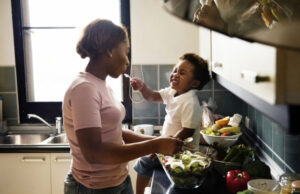
Mother and daughter cooking together

Growing healthy habits

Top tips for eating well

Children need a balanced diet to grow, learn and stay healthy. The food children eat each day helps them have energy, feel well, and enjoy play and learning.
Small, everyday habits can make a big difference.

Eat together and lead by example

  • Share meals as a family.
    • When children see you enjoying healthy foods, they are more likely to try them too.

Offer balanced diets and choose healthy snacks

  •  Have a look at recipe ideas section below.

Keep trying new foods

  • Children may need to try a food many times before they accept it.
  • Offer different textures, colours and flavours.

Create a simple routine

  • Aim for 3 meals and 2 healthy snacks each day.

Reduce distractions

  • Turn off the TV, tablets and phones at mealtimes.

Top tips for moving more

Being active every day helps children stay healthy, sleep better, enjoy play and learning more.

Movement doesn’t need to be perfect, small bursts of fun activity throughout the day all add up.
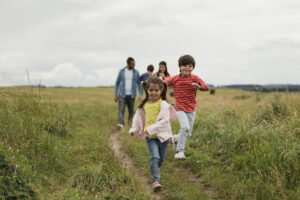
A three generation family walking through the countryside

Make movement part of everyday life

Turn ordinary moments into active play:

  • dance while making dinner
  • walk to the shop
  • or race to tidy toys.

Play together and lead by example

  • When they see you walking, dancing or playing, they’re more likely to join in too.

Keep it fun

  • Choose activities your child enjoys, balls, scooters, bubbles, dancing, park trips, chasing games or obstacle courses.

Girl on a red space hopper

Limit long periods of sitting

  • Encourage breaks from screens.
  • Move, stretch or stand up every 30 to 60 minutes.

Go outdoors when you can

  • Fresh air and open space help children be naturally active, parks, gardens, playgrounds, or just a walk around the block.

HENRY: Healthy start, brighter future
Our HENRY Parenting Programme (0 to 5) offers an 8‑week course to help families build healthy routines, enjoy mealtimes, understand children’s behaviour, and feel more confident in everyday parenting.

Find out more or sign up HENRY 0 to 5

For HENRY 5 to 12 courses, visit HENRY 5 to 12: Healthy families growing up page.
Growing healthy habits: Eat well and vitamins

The First Steps Nutrition Trust

Visit the First Steps Nutrition: Eating well in the early years webpage.

Advice on healthy eating for:

  • babies
  • toddlers
  • young children.

It includes:

  • practical guidance
  • meal ideas
  • help families understand portion sizes.

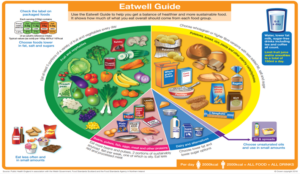
The Eatwell Guide is a simple guide that shows how to eat a healthy, balanced diet.

It helps you understand:

  • what types of food to eat
  • how much of each type to include
  • how to balance your meals

The Eatwell Guide divides food into groups, including:

  • Fruit and vegetables
  • Starchy foods (like bread, rice, pasta and potatoes)
  • Dairy or dairy alternatives
  • Beans, eggs, fish and other protein foods
  • Oils and spreads (small amounts)

It also reminds you to:

  • drink plenty of fluids
  • limit foods high in sugar, salt and fat

Alternative eatwell guides

  • Culturally adapted Eatwell guides, this includes:
    • Polish
    • Bengali
    • West African
    • East African
    • Caribbean
  • South Asian Eatwell guide
  • The Vegan Eatwell guide
  • Vegetarian Eatwell guide

Healthier Families

Healthier Families gives easy ways to eat well and move more as a family.

You can find:

  • healthy recipes and meal ideas for families
  • food swaps to cut down on sugar, fat and salt
  • 5 a day help and portion ideas
  • healthy snacks and lunchbox tips
  • fun activities to help kids stay active every day
  • A sugar calculator

Visit the NHS Healthier Families website

Healthy Start vouchers

Vitamin medicine for kids

You may be able to get Healthy Start if:

  • you are more than 10 weeks pregnant
  • you have a child under 4 years old
  • your family’s monthly ‘take-home pay’ is  less than £408 from employment

Healthy Start can help you buy:

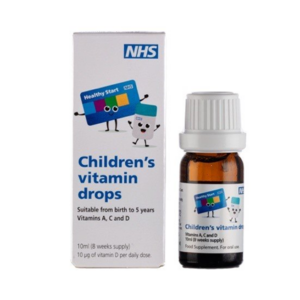
  • Healthy Start vitamins
  • fruit and vegetables
  • milk
  • infant formula (if needed)

Preschoolers eating snack.

Check if you’re eligible and apply on the NHS Healthy Start website

Find out where you can collect Healthy Start vitamins by using the postcode searcher

Vitamins for babies

Newborn baby boy in bed. New born child sleeping under a blue knitted blanket. Children sleep. Bedding for kids. Infant napping in bed. Healthy little kid shortly after birth. Cable knit textile.

Vitamin D

  • Vitamin D helps your baby build strong bones and teeth.
  • Breastfed babies need 8.5 to 10 micrograms (mcg) of vitamin D every day.
  • Formula-fed babies do not need extra vitamin D if they drink 500ml of formula a day.

You can buy vitamin D drops in supermarkets and pharmacies.

Some families may get free Healthy Start vitamins.

Vitamins for children aged 6 months to 5 years

running

Children aged 6 months to 5 years should take a daily multivitamin containing vitamins A, C and D.

Vitamin A

  • Helps the immune system, eyesight and keeps skin healthy.
  • Found in: carrots, sweet potato, broccoli, spinach, and dairy foods.

Vitamin C

  • Helps the body absorb iron and supports the immune system.
  • Found in: broccoli, tomatoes, kiwi, strawberries and oranges.

Vitamin D

  • Needed to keep bones and muscles healthy.
  • Everyone (adults and children) should consider taking 10 micrograms a day.

Important information

  • Always check the label to make sure the vitamin is right for your child’s age.
  • Do not give more than the recommended dose, if you are unsure, speak to your pharmacist.
  • Keep all vitamins out of reach of children.
  • Gummy vitamins are usually for children aged 4 years and older.
    • They are not suitable for babies and toddlers because of choking risks and because younger children cannot chew them safely.

Useful links

  • NHS Healthier Families for simple tips, recipes, vitamin guidance, meal ideas, and support to help children stay healthy as they grow.
  • NHS Best Start in Life: Vitamins
  • Read the Leeds Community Healthcare Nutrients page for information on the key nutrients children need for healthy growth.

Helping your child try new foods

Trying new foods

Many children go through a stage where they refuse foods they once liked or won’t try new foods.

This can happen even if they ate well as babies.

his is very common and happens for several reasons:

  • Some children are more careful with new tastes and new foods.
  • Children’s eating changes as they grow.
  • Younger children often want to do things by themselves.

Every child is different, so their feelings about food will be different too.

Tips to help your child try new foods

There is no single method that works for every family, you may need to try a few ideas and see what suits your child.

Staying calm, keeping things positive, and being patient can make a big difference.

Keep mealtimes relaxed

  • Talk about your day instead of focusing on how much your child is eating.

Eat together

  • Children copy adults.
    • Seeing you enjoy healthy foods makes it easier for them to try.

Offer small amounts of different foods

  • let your child choose from a few options.

Never force them to eat

  • gentle encouragement works better.

Make food fun

  • Let your child help cook, mix, wash vegetables, or arrange food on a plate.

Be patient

  • Children often eat slowly.
  • Give them time and avoid pressure.

Praise the effort

  • Praise them for trying, even if they only take a tiny taste or lick.

Toddler feeding parent

West Yorkshire Healthier Together

Visit the West Yorkshire’s Healthier Together page on fussy eating. Help for families to understand fussy eating and support children to try new foods.

Food banks provide free emergency supplies of food. Visit our Family Support page on how to get food bank vouchers.

Growing healthy habits: Move more

The NHS recommends the below amount of physical activity for different ages:

Babies (under 1 year)

Be active throughout the day:

  • including 30 minutes of tummy time spread across the day (while awake)

This could include:

  • Reaching and grabbing
  • Rolling and wriggling
  • Moving their arms and legs
  • Playing on the floor with supervision
  • Crawling (when they are ready)

Reach and roll

Toddlers (1 to 2 years)

At least 3 hours of activity across the day. This might include:

  • walking and climbing
  • playing outdoors
  • dancing and moving to music
  • playing with balls or simple toys

Pre‑schoolers (3 to 4 years)

  • At least 3 hours of activity across the day, including 1 hour of more active play
  • Young children need a mix of:
    • Active play
    • Outdoor play
    • Moving in different ways

This could include:

  • Running
  • jumping
  • climbing
  • Riding a bike or scooter
  • Playing ball games

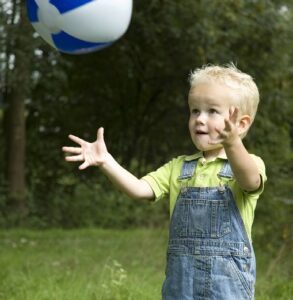
catching a ball

Children and young people (5 to 18 years)

Aim for an average of at least 60 minutes of activity each day. This can include:

  • walking
  • cycling
  • playing in the park
  • running

Types of activity each week include both:

  • Activity that makes the heart beat faster (aerobic activity)
    • Walking, running, or cycling
  • Activities that strengthen muscles and bones
    • Climbing or using playground equipment
    • Jumping and hopping

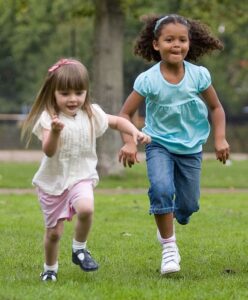
Kids running

NHS Guidance

  • Visit the physical activity guidelines for under‑5s for more information and ideas.
  • Visit the physical activity guidelines for children and young people (5 to 18 years) for more information and ideas.

NHS Healthier Families

See the NHS Healthier Families indoor activity ideas

Great for rainy days or small spaces. Includes:

  • Dancing games
  • Obstacle courses
  • Indoor sports
  • Disney Shake‑Up games

BBC Tiny Happy People

BBC tiny happy people logo

Visit the BBC Tiny Happy People getting outdoors webpage for ideas to help you get outside with your baby or toddler.

A three generation family walking through the countryside

Active Leeds offers a wide range of low‑cost sport, fitness and wellbeing activities across the city. You can book sessions, find timetables, or explore local leisure centres through the website or the Active Leeds App.

Your Local Park pages help you find parks near you, whether you want somewhere for family walks, playgrounds, picnics, sports, nature trails or simply space to run and play.

Contact Us

You can call our Single Point of Access (SPA) from Monday to Friday, 8:30am to 5pm.

  • Phone: 0113 843 5683

You can also keep up to date with our service and find more information on our Facebook or Instagram pages.

If you 11 to 19 you can contact us via ChatHealth.

Text a 0 to 19 specialist public health nurse on 07520 619 750

Relay UK: Free support to help deaf people and those who have hearing loss or have a speech impairment to communicate over the phone.

Useful links

  • Your Feedback means a lot: Complete our Friends and Family Test
  • How can we help you access and attend your appointment?
  • How to use ReciteMe accessibility and language tool guide
  • Support with accessing digital

Contact Us

You can call our Single Point of Access (SPA) from Monday to Friday, 8:30am to 5pm.

  • Phone: 0113 843 5683

You can also keep up to date with our service and find more information on our Facebook or Instagram pages.

If you 11 to 19 you can contact us via ChatHealth.

Text a 0 to 19 specialist public health nurse on 07520 619 750

Relay UK: Free support to help deaf people and those who have hearing loss or have a speech impairment to communicate over the phone.

Useful links

  • Your Feedback means a lot: Complete our Friends and Family Test
  • How can we help you access and attend your appointment?
  • How to use ReciteMe accessibility and language tool guide
  • Support with accessing digital
survey icon
Tell us what you think

We would love to know what you think of our website and if there is anything we can improve.

Complete our survey and share your thoughts.

Leeds Community Healthcare NHS Trust Logo
Headquarters
Leeds Community Healthcare NHS Trust
White Rose Office Park, Building 3
Millshaw Park Lane
Leeds, LS11 0DL
Useful Links
  • News
  • Current vacancies
  • Contact us
  • Give feedback
Need to speak to someone urgently?
MindMate Website Logo MindWell Leeds Website Logo NHS 111 Logo
© 2026 Leeds Community Healthcare NHS Trust - Website by 6B
  • Accessibility statement
  • Privacy notice
  • Cookie policy
  • Terms and conditions
  • Policies and guidelines