This page explains how to make every sleep a safe sleep for your baby, day and night, including nap times.
Information about sleep
How can 0 to 19 help?
During routine visits, your 0 to 19 public health nurse (health visitor) will ask to see where your baby sleeps.
This is a normal part of the visit. We do this to help keep your baby safe. It helps us check that the sleep area is flat, clear and safe, and gives you a chance to ask questions or get ideas to make the space even safer. Our goal is to support you and your baby, not to judge your home.
We will:
look at your baby’s sleep space with you to check it is flat, clear and safe
help you spot any risks together, such as loose bedding
give reassurance and practical ideas
answer questions and help you make small changes
Why it matters?
At least 300 infants die suddenly and unexpectedly each year in England and Wales. Following safer sleep steps every time reduces the risk of sudden infant death syndrome (SIDS).
The safest way for your baby to sleep
Always put your baby on their back for every sleep, day and night, in a clear flat sleep space.
Use a firm, flat, waterproof mattress
Keep the cot clear, no pillows, bumpers, nests, pods, toys or loose bedding.
Keep your baby smoke free before and after birth.
Avoid your baby getting too hot, a room temperature of 16 to 20°C is comfortable for babies.
Keep your baby in the same room as you for the first 6 months, in their own cot or Moses basket.
Supporting information
It is normal for babies to wake in the night
Babies are born to:
Feed often: They have small stomachs and need regular feeds
Stay close to you: This helps them feel safe
Wake easily: They often wake after each sleep cycle, which helps keep them safe
Many parents worry that their baby is not sleeping as well as other babies.
It is helpful to know that:
most babies wake often, and this is normal
waking helps babies feed, grow, and stay safe
Trying to make babies sleep for long periods too early can:
make breastfeeding more difficult
be less safe
reduce your baby’s natural ability to wake if they need help
Understand what normal baby sleep looks like. It explains how much sleep babies need, why they wake often, how sleep changes over the first year, and why some sleep products can be unsafe.
Facts about normal baby sleep and practical information to help you make informed choices about where and how your baby sleeps. The BASIS information sheets are also available in a number of different languages.
The safest place for your baby to sleep is in their own separate sleep space (cot or Moses basket). This helps reduce the risk of SIDS.
You should never fall asleep on a sofa or chair with your baby.
Co‑sleeping
Co‑sleeping means sleeping in the same place as your baby.
It includes sleep that is planned or sleep that happens by accident.
Bed‑sharing
Bed‑sharing means your baby sleeps on the same bed as you for most of the night while you are both asleep.
This is different from bringing your baby into bed just to feed or cuddle.
When not to co‑sleep or bed-share
This can be very dangerous if:
you or anyone in the bed has had alcohol
you or anyone in the bed smokes, or baby was exposed to smoking in pregnancy
you or anyone in the bed has taken drugs or medication that make you sleepy
your baby was premature (before 37 weeks) or weighed under 2.5kg
you or anyone in the bed has a high Body Mass Index (BMI).
In these situations, always place your baby in their own cot or Moses basket.
If you co‑sleep or bed-share make the bed safer, visit the co-sleeping page by Lullaby Trust for more practical advice.
If you choose to bed‑share or think you might fall asleep:
Keep pillows, duvets and adult bedding away from your baby.
Make sure your baby cannot get trapped between the mattress and the wall or headboard.
Keep other children and pets out of the bed.
Place your baby on their back on a firm, flat surface.
Never leave your baby alone on an adult bed.
Check your sleep space before every sleep, especially if you feel unwell or unusually tired.
Car seats are for travelling, not for long sleeps.
Do not leave your baby sleeping in a car seat.
On long journeys, stop every 2 hours and take your baby out.
Premature babies and babies under 4 weeks should not be in a car seat for more than 30 minutes.
Check your baby’s head, neck and back often to make sure they are not slumping forward.
If possible, an adult should sit in the back and check the baby every 30 minutes (more often for very small babies).
Never place a car seat on a soft or high surface like a bed, sofa or table.
Explains why car seats should be used for travel only and what to do if your baby falls asleep in a car seat. It also helps you choose and use a car seat correctly to keep your baby safe.
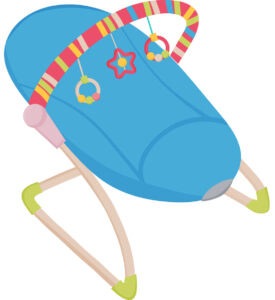
Play seats, bouncers and swings are for awake play only.
They are not safe for sleep because your baby can slump which can make breathing difficult.
Straps may not stop your baby from moving into unsafe positions.
Explains the positions and products that can block or narrow a baby’s airway, and shows how to create a safe, flat, clear sleep space to help your baby breathe easily and reduce the risk of SIDS.
A sling is a soft baby carrier made from fabric that holds your baby close to your body.
Slings must be used exactly as the instructions say.
If your baby needs to feed, take them out of the sling.
When you’re wearing a sling or carrier follow these rules
Explains about swaddling and how to use baby slings safely using the T.I.C.K.S. guidance.
Lullaby Trust: Twins and multiples explains how to sleep twins or multiples safely. It explains the safest sleep positions, when babies can share a cot, and how to reduce the risk of SIDS when caring for more than one baby at a time.
The Lullaby Trust is a UK charity that provides expert advice on safer sleep for babies and works to reduce the risk of Sudden Infant Death Syndrome (SIDS).
Supports families who are struggling to afford essential items for their babies and young children. The charity provides new and pre‑loved items like cots, pushchairs, clothes, toys, nappies and formula, and offers help through referrals and community sessions.
Support for families who are finding it hard to afford the essential items needed for a new baby. Through a professional referral, they can provide a Moses basket filled with new born essentials for babies up to 12 months.







 you or anyone in the bed smokes, or baby was exposed to smoking in pregnancy