
Accessibility and language tool guide
Skip to content
Leeds Community Healthcare NHS Trust Logo
Careers Contact Us
  • Home
  • Our services (A to Z)
  • About us
    • Access to information
    • Equality and diversity
    • Research
    • Awards
    • Infection prevention and control
    • Clinical and medical education and training
    • Board of directors
    • Working in partnership
    • Safeguarding children and adults
    • Charity
    • Sustainability
  • News
  • Join our team
    • Why work for us?
    • Flexible staff
    • Newly qualified graduates
    • Vacancies
    • Apprenticeships
    • Working and living in Leeds
  • Patient experience and engagement
    • Compliments, comments and complaints
    • Your feedback and experience
    • Person-centred care
    • Get involved
    • Thinking about using a camera or other equipment to monitor someone’s care?
    • Help to access and attend your appointment
    • About Me project
  • Contact us
    • Plan your journey
    • Location finder
    • Press and media enquiries
Skip to content
Leeds Community Healthcare NHS Trust Logo
  • Home
  • Our services (A to Z)
  • About us
    • Access to information
    • Equality and diversity
    • Research
    • Awards
    • Infection prevention and control
    • Clinical and medical education and training
    • Board of directors
    • Working in partnership
    • Safeguarding children and adults
    • Charity
    • Sustainability
  • News
  • Join our team
    • Why work for us?
    • Flexible staff
    • Newly qualified graduates
    • Vacancies
    • Apprenticeships
    • Working and living in Leeds
  • Patient experience and engagement
    • Compliments, comments and complaints
    • Your feedback and experience
    • Person-centred care
    • Get involved
    • Thinking about using a camera or other equipment to monitor someone’s care?
    • Help to access and attend your appointment
    • About Me project
  • Contact us
    • Plan your journey
    • Location finder
    • Press and media enquiries
Leeds Community Healthcare NHS Trust Logo
/Our services (A to Z)/0 to 19 public health integrated nursing service (0 to 19 PHINS)/Toileting

Toileting

This page brings together simple, reliable information to support you and your child.

We know that toileting can feel overwhelming at times. Whether your child is learning to use the potty, having daytime accidents, wetting at night or struggling with constipation.
toileting

Our 0 to 19 public health nursing service can help by offering:

  • advice and reassurance at our contacts or over the phone
  • practical tips to use at home or when out and about
  • support for routines, including healthy diet (see our HENRY parenting page)
  • When and how to get more specialist help

If your child needs more support

Some children may need extra help beyond universal advice. We work closely with other services and we can help you understand what level of support is right for your child and how to access it.

Growing healthy habits

ERIC: The Children’s Bowel and Bladder Charity

They advise that:

  • potty training should be viewed as a process, not a single event.
  • children learn potty skills best through early practice, routine and repetition.
  • you do not need to wait for “signs of readiness”

ERIC explains that:

  • Many children never show obvious readiness signs.
  • Very few children will suddenly decide they want to stop wearing nappies.
  • Waiting too long can make training harder.

Most children are able to begin learning potty skills from around 18 months, and early introduction gives them time to practise before stopping nappies. Children with additional needs can also learn with extra support and a clear routine.

Early learning is key

Top tips for potty training

  • Choose a calm period with no major changes.
  • Explain the change, “Goodbye nappies, hello pants.”
  • Use songs or short books to help them stay seated on the potty
  • Praise every attempt
  • When out and about:
    • take spare clothes and a travel potty if useful.
    • maintain your home routine.

  • Visit the ERIC: Potty training (how to start and best age to potty train) page
  • The West Yorkshire Healthier Together website provides simple, reassuring guidance on potty and toilet training, including when to start, how to begin, and what to do if things are difficult.

The ERIC charity explains that daytime wetting and bladder problems are common in childhood, and in most cases everything is normal, the bladder simply isn’t working as well as it could. Most problems improve by following ERIC’s:

4 steps to a healthy bladder

  • Step 1: Check the bowel first (Constipation is the number one cause)
  • Step 2: Rule out a urinary tract infection (UTI)
  • Step 3: Get drinking right;
    • 6 to 8 drinks per day
    • Mostly water
    • Avoid caffeinated or fizzy drinks
  • Step 4: Toilet routine and good habits;
    • Going to the toilet 4 to 7 times a day (more often for younger children)
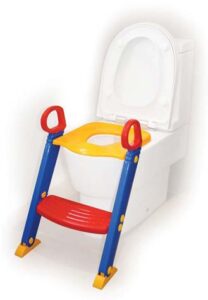
    • Sitting comfortably with feet supported on a step

Getting help if you’re worried

You should speak to GP if:

  • wetting continues after trying advice from ERIC
  • your child has pain when weeing
  • symptoms suddenly worsen
  • you suspect a UTI
  • There is constipation that isn’t improving

Visit the advice for children with daytime bladder problems page.

According to ERIC: The Children’s Bowel and Bladder Charity, bedwetting is very common and affects:

  • 1 in 15 seven‑year‑olds
  • 1 in 75 teenagers

Step 1: Work out why your child is wet

  • Do they have constipation?
  • Do they have daytime bladder problems (frequent wees, urgency)
  • Do they have a urinary tract infection (UTI)

Step 2: If bladder and bowel health is sorted, try the bedtime checklist

  • Daytime drinking
    • 6 to 8 drinks, spaced evenly throughout the day.
  • Stop drinks 1 hour before bed
    • No drinks after this until morning.
  • Toilet routine
    • A relaxed sit as part of the bedtime routine
    • A second toilet visit if more than 30 minutes pass before sleep
  • Protect the bed
    • Use waterproof mattress covers, duvet and pillow protectors, and absorbent sheets.
  • Help them know what to do if they wake
    • Use a night light or torch
    • If using bunk beds, sleep in the bottom bunk

Getting help if you’re worried

Speak to your GP if:

  • your child is 5 or older and wetting continues
  • your child has daytime symptoms (urgency, frequency, daytime wetting)
  • your child has signs of UTI (pain, cloudy or smelly wee)
  • you suspect constipation that isn’t improving

Visit the children with night time wetting page

ERIC describes constipation as a “poo traffic jam”. This means poo builds up in the bowel, becomes hard, and blocks the space the bladder needs to work properly.

Common reasons

This include:

  • not drinking enough
  • low‑fibre diet
  • holding poo in because it once hurt

Try to:

  • give your child plenty of drinks, mostly water
  • offer foods with lots of fruit and vegetables
  • remind them to sit on the toilet often, especially after meals
  • use a small step so their feet can rest on it
  • stay calm. Constipation is not their fault.

Visit the ERIC: Constipation for advice and information or read more on the NHS website

Contact us

You can call our Single Point of Access (SPA) from Monday to Friday, 8:30am to 5pm.

  • Phone: 0113 843 5683

You can also keep up to date with our service and find more information on our Facebook or Instagram pages.

If you 11 to 19 you can contact us via ChatHealth.

Text a 0 to 19 specialist public health nurse on 07520 619 750

Relay UK: Free support to help deaf people and those who have hearing loss or have a speech impairment to communicate over the phone.

  • Your Feedback means a lot: Complete our Friends and Family Test
  • How can we help you access and attend your appointment?
  • How to use ReciteMe accessibility and language tool guide
  • Support with accessing digital

Contact us

You can call our Single Point of Access (SPA) from Monday to Friday, 8:30am to 5pm.

  • Phone: 0113 843 5683

You can also keep up to date with our service and find more information on our Facebook or Instagram pages.

If you 11 to 19 you can contact us via ChatHealth.

Text a 0 to 19 specialist public health nurse on 07520 619 750

Relay UK: Free support to help deaf people and those who have hearing loss or have a speech impairment to communicate over the phone.

  • Your Feedback means a lot: Complete our Friends and Family Test
  • How can we help you access and attend your appointment?
  • How to use ReciteMe accessibility and language tool guide
  • Support with accessing digital
survey icon
Tell us what you think

We would love to know what you think of our website and if there is anything we can improve.

Complete our survey and share your thoughts.

Leeds Community Healthcare NHS Trust Logo
Headquarters
Leeds Community Healthcare NHS Trust
White Rose Office Park, Building 3
Millshaw Park Lane
Leeds, LS11 0DL
Useful Links
  • News
  • Current vacancies
  • Contact us
  • Give feedback
Need to speak to someone urgently?
MindMate Website Logo MindWell Leeds Website Logo NHS 111 Logo
© 2026 Leeds Community Healthcare NHS Trust - Website by 6B
  • Accessibility statement
  • Privacy notice
  • Cookie policy
  • Terms and conditions
  • Policies and guidelines