


Managing breathlessness
Tips and advice for managing breathlessness with a long-term health condition.
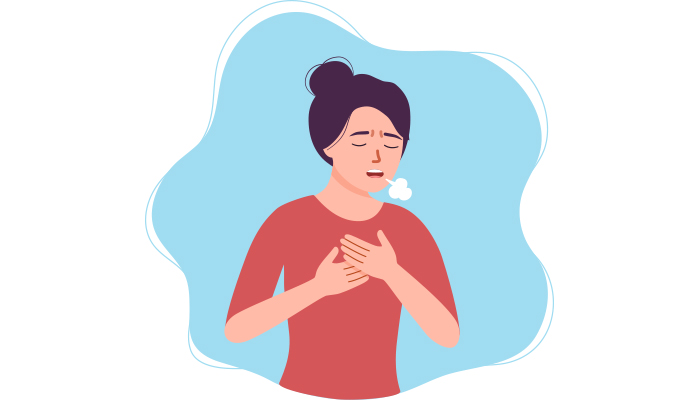
Breathlessness
Whilst breathlessness is normal during activity, people with long-term health conditions can often find they are more breathless than usual doing their usual activities. This page offers useful information and guidance for how to manage your breathlessness more effectively, helping you feel more in control of your breathing and improve your overall quality of life.
Techniques
Diaphragmatic breathing involves using your diaphragm, a large, dome-shaped muscle at the base of the lungs, to help get air into the bottom of your lungs. This helps to trigger the body’s parasympathetic nervous system, which helps the body to relax, lower your heart rate, and reduce feelings of breathlessness.
How to do
- Settle into a comfortable position, ideally lying down if able to do so
- Place your hands on your stomach
- Relax your shoulders and upper chest
- Breathe in gently through your nose, feeling your stomach rise and expand
- Breathe out gently through your nose, letting the air go rather than forcing it out
- Take a slight pause after each breath out, before taking your next breath in
Continue doing this for a few minutes, letting go of any tension you feel in your body.
Paced breathing means timing your breathing to your activities, which helps to maintain control of your breathing throughout your activity and delay the onset of breathlessness.
For repetitive activities (such as climbing stairs or walking uphill)
Try breathing in for 1 to 2 steps, then out for 2 to 3 steps
For one-off activities (such as lifting or bending)
Trying breathing in before making the effort, then breathe out as you make the effort
Pursed lip breathing helps to slow and calm your breathing during activity.
To do this:
- breathe in through your nose as normal
- make an ‘O’ shape with your lips
- breathe out through your mouth slowly
Your breathe out should be slow and relaxed. If you were blowing on a candle, you would want the flame to move but not go out
Here are some positions that can also help to recover from breathlessness quicker when used with breathing control
Forward lean sitting
Sitting on a chair, leaning forwards with your forearms resting on your thighs
Relaxed sitting
Sitting upright in a supportive chair, with shoulders and arms relaxed
Forward lean standing
Standing with a forward lean, with your arms resting on a solid object (back of chair, trolley and window ledge)
Backward lean standing
Standing with a backward lean, with your back against a wall, lamp post or closed door. Stand with your feet slightly forwards