

Physiotherapists
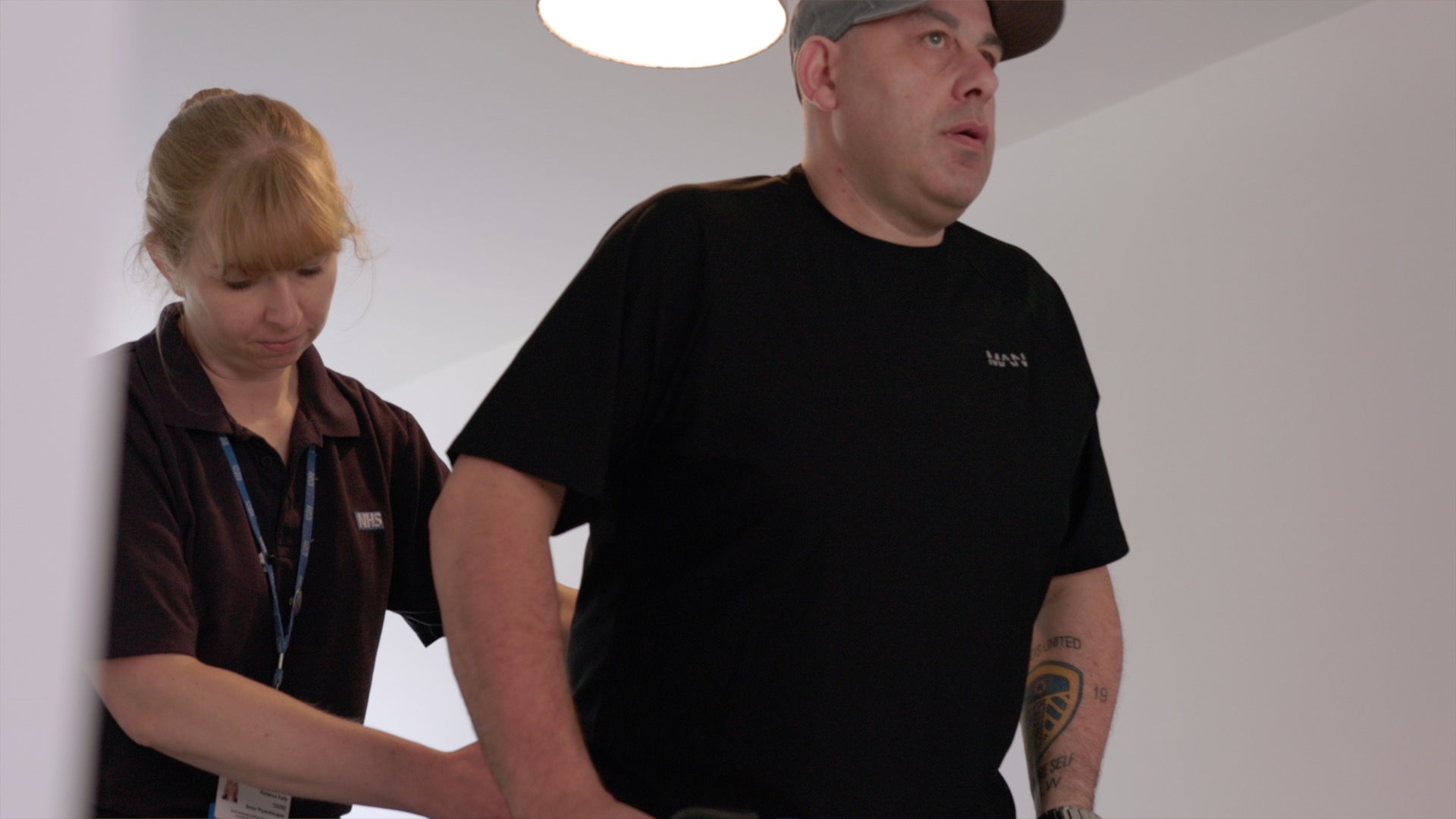
Hello my name is Lynn. I am a physiotherapist.
As part of your rehabilitation, you may meet with a physiotherapist. We will aim to understand your movement difficulties by assessing your mobility, strength, joint movement, sensation, posture and balance. Your therapy will be focused on your goals. This may include hands on therapy to support achieving more normal movement patterns, exercise therapy, advice on your condition and self-management. As part of this we might also support you to visit your local gym and swimming or hydro pools. We will see you at home, in the local community or at our therapy gym at St Marys Hospital
Physiotherapy information for neurological conditions
What is Neuro-physiotherapy?
Neuro physiotherapy is a type of physiotherapy that helps people who have problems with movement, balance or function due to conditions affecting the brain, spinal cord or nerves. Treatment focuses on helping you regain skills, improve independence and make everyday activities easier and safer.
A large part of neuro physiotherapy involves self-directed rehabilitation, meaning exercises and strategies you practise outside of therapy sessions. This is because recovery and improvement happen through regular practice and repetition, not just during appointments. Your physiotherapist will support you to manage your condition confidently, helping you understand your body, stay active, and continue making progress in your daily life.
How we work
We will work with you to set realistic and meaningful goals with a clear outcome, whether that is improving a skill, maintaining your abilities, or learning ways to manage your condition.
Having a goal helps keep rehabilitation focused and purposeful, and helps you see changes over time. For some people, progress may be about staying as well as possible and building confidence in self-management, and we are here to support you with this.
What to expect
Your first appointment will involve questions about your health, your problems and your goals. We will look at your movement, this may involve standing, walking or transferring, and moving your arms and legs.
Treatment
Your physiotherapy treatment will be tailored to you, and your physiotherapist will advise what is most appropriate for your needs and goals once you have been assessed. Some of the treatments we may advise include:
- Exercise prescription
- Hydrotherapy
- Functional electrical stimulation (FES)
- Falls management
- Therepeutic handling techniques
- Gait (walking) re-education
- Equipment provision
We may also refer you to other professionals if this would support your overall rehabilitation. Not every treatment is suitable for everyone, and your physiotherapist will talk through the options with you to agree the best approach together.
Top tips to get the most from your neuro physiotherapy
- Keep practising: Regular exercises help you make progress
- Be honest: Tell us what’s working and what’s not
- Focus on your goals: They guide your rehab
- Make it routine: Fit exercises into your day</li.
- Pace yourself: Take breaks and manage fatigue
- Ask questions: Understanding helps you improve
- Stay consistent: Small steps add up over time.
Below are some useful links for information about how to prevent a fall:
- NHS: Falls
- Active Leeds: Falls prevention
- Leeds Directory: Falls prevention and management
- Leeds Community Healthcare Falls service
- Leeds Community Healthcare: Preventing falls at home
- Leeds Community Healthcare: Preventing falls in a care setting
- Leeds Community Healthcare: Useful organisations for people at risk of falls
- Chartered Society of Physiotherapy: Get up and go guide
- Chartered Society of Physiotherapy: Falls proof guide
Below are some links to exercise group information within Leeds, some of which are geared towards people with neurological conditions or disabilities:
Complete as often as you can during the day.
Benefits:
- To prevent your affected arm and hand from becoming stiff and painful
- To maintain your current range of movement at each joint without pain
- To make putting on and taking off clothes easier
- To ensure good hand hygiene and to be able to clean your armpit.
- Ensure you are sitting comfortably
- Ideally you should carry out these exercises at least twice a day
- Hold each stretch for approximately a count of 3 and repeat 5 times
- Use smooth, slow movements. Avoid rapid, jerky movements.
- All exercises should be performed to the point of stretch without pain. If you feel pain, slightly back off and hold the stretch
- Focus on the quality of each movement, rather than the number of each exercise.
- Sit in a chair with your arms by your sides
- Make sure your back is touching the back of the chair
- Raise your shoulders towards your ears for a count of 3
- Return to the starting position
- Repeat 5 times
- In sitting try to sit up straight and then take your shoulder blades back and down. (imagine a pencil between your shoulder blades). Hold this for 3 seconds then relax. Do 10 times.
- Make sure your back is touching the back of the chair throughout the exercise
- Clasp your hands together and straighten your elbows out in front of you.
- Turn your body to the left. Hold for a count of 3
- Turn your body to the right. Hold for a count of 3
- Repeat 5 times for each side.
- Clasp both hands together
- Straighten your elbow and slide your hands down the front of your left leg as far as is comfortable
- Hold for 3 seconds
- Slide your arms back up your legs and into upright sitting posture
- Repeat this process over your right leg.
- Sit up straight and clasp your hands together
- Bend your elbows as you bring your hands up to your left shoulder
- Hold for 3 seconds
- Straighten your arms out with your elbows as straight as possible
- Bring your hands to your right shoulder and hold for 3 seconds
- Repeat on each side 5 times.
- Clasp hands together
- Turn palm up
- Hold 3 counts
- Turn palm down and hold 3 counts
- Repeat 5 times
- Place hands together (like a prayer position) or clasp
together if easier and to ensure your affected hand is well supported - Push the left hand against the right
- Hold for a count of 3
- Push the right hand against the left
- Hold for a count of 3
- Repeat 5 times for each side
- Try to keep your forearms still and only bend at the wrist.
- Clasp hands together off edge of a table or over rolled towel
- Move wrist up and hold 3 counts
- Move your wrist down and hold 3 counts
- Repeat 10 times.
- Place your arm on a table or pillow so that it is well supported
- Bend each finger individually towards the palm of the hand
- Ensure each joint is stretched inwards
- Hold for 30 seconds
- Repeat for all fingers to create a curled fist position
- Straighten each finger individually so that every joint is straight
- Hold each stretch for 30 seconds
- Aim to place your hand flat on your table or pillow (if you are able).
- Use opposite hand to bend fingers and hold
- Use opposite hand to straighten fingers
- Hold 3 counts
- Repeat 10 times.
- Place fingers of opposite hand between fingers
- Spread fingers apart, then together
- Hold 3 counts
- Repeat 10 times.
- Raise your thumb into the ‘thumbs up’ position
- Hold for 5 seconds
- Push your thumb down towards the base of your little finger
- Hold for 5 seconds
- Repeat 5 times.
- In sitting, holding your hands together,
lift both arms forward then over your head - Take your shoulders up to discomfort only
- Repeat 5 times
- Perform exercise 2 times a day
General procedures
Precautions
Shoulder shrug
Note: Remember to stop if it hurts
Shoulder retraction
The twist
Do not carry out this exercise if you experience any shoulder pain or have a subluxed shoulder.
Note: Remember to stop if it hurts
Stretching the elbow
Stretching the forearm, hand and wrist
Forearm
Wrist
Note: Remember to stop if it hurts