

Managing relationships, setbacks and planning for the future
Managing relationships
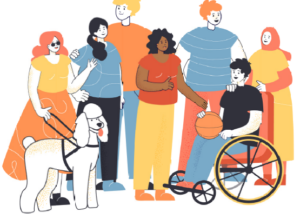
Connecting with others can feel like the last thing you want to do when pain dominates your life. Yet doing things with other people is likely to lift your mood and distract you from focusing on your pain. It can also motivate you to do more of the activities you enjoy.
How do you think your pain is affecting your relationship with other people?
What would you like to say to your family and friends?
What other people have said:
- People no longer notice my pain
- I am lonely
- Me and my partner don’t do anything together anymore
- I don’t enjoy things anymore
- What will people think of me if they see me like this!
- I am worried about going outside
- Going out flares up my pain
- I can’t face meeting people now
- I would love to be able to play with the kids or grandchildren
- Family and friends don’t understand
Things that can help
- Talking about chronic pain and your pain management plan together.
- Ensuring family and friends are aware of your limitations.
- Discussing how these changes affect family and friends.
- Finding new roles.
- Having fun together.
- Challenging negative thoughts.
- Stress management.
- Get involved with Leeds Community Pain Service Peer Support Group, the benefits include:
- Reduce isolation, make new friends
- Shared identity and acceptance
- Increase confidence
- Developing and sharing skills and knowledge
- Improve physical and mental health
- Improve emotional resilience
- Challenging stigma and discrimination
Setting goals and adding these to your pain management plan, see the example below.
| What do you want to change? | What is your current behaviour (baseline)? | What are the barriers to change? | Goals |

| I have stopped spending time with my friends. | I spend 99% of the time at home on my own. | Pain | Join the Leeds Community Pain Service Peer Support group. |
| I feel lonely. | I watch TV and potter around the house. | Fear of making the pain worse | Start reintroducing time with your friends, start slow and build up over time. |
| Anxiety | Think about doing something every week with a friend, for example, a small walk. | ||
| Motivation | Make use of virtual communication. | ||
| I don’t know what to do or what’s available | Look at the links for improving loneliness. | ||
| Look at the links at the end for activities, facilities, increasing your support network. |
Please complete your own goals for improving your relationship.
| What do you want to change? | What is your current behaviour (baseline)? | What are the barriers to change? | Goals |
Managing setbacks
What is a setback?
What is a setback?
A setback is anything that delays or stops you from continuing with your pain management plan. This could include:
- A flare up of pain
- Increased stress
- Poor health
- Depression or worsening depression
- Family issues
- Money worries
- Unemployment or financial worries
What can cause a flare up of pain?
- All of the above
- Not pacing
- Taking too much on
- Pushing through the pain
- Not being able to say no
- Standing and sitting for too long
- Not goal setting
- Not planning
- All work and no relaxation, rest periods
It is common to have setbacks when managing long term pain.
Therefore it is important to have a setback plan.
“So, how do I manage a setback?
- Don’t panic!
- Don’t stop everything, this is only a short term problem
- If you are forced to rest, keep this to a minimum.
The longer you rest, the more difficult it is to get going again.
Some ways to manage setbacks
- Keep doing your exercises, reduce by half your normal level for a few days.
- Cut your sitting, standing and walking times limits in half.
- Use heat or ice packs.
- Increase your relaxation time.
- Use your pacing skills.
- Set yourself SMART short term goals: simple, measurable, achievable, realistic, time limited
- Prioritise what could be done during the setback.
- Plan how you are gradually going to increase your exercises and activities.
- Keep a diary of what helped you to manage the setback this time. Inform family and friends what they can do to help.
- Review (don’t dwell on) recent activities that may have caused the setback. What can you learn from this?
- If you need medication then take it regularly ‘by the clock’ and reduce gradually as the setback improves.
- Remember where you were before this setback. Focus on your achievements and not the setback.
Example: Steve’s plan to manage a setback
- Start my relaxation, the deep breathing skills.
- Use my relaxation music.
- Do my three stretches twice a day just to the stretch sensation, not the pain.
- Check through my success list in the last four weeks.
What helped me in my current or last setback?
What will I do in my next setback?
Planning for the future
- Continue following your activity, relaxation and fun goals.
- Is there anything that would help you keep on track?
- Where can you seek other help you might need? There are some suggestions below.
Reduce isolation:
Local activities and facilities to increase your support network
- Linking Leeds
- Leeds Directory connects you to local activities and events
Help with money worries
GP support
Most GP practices have health coaches or social prescribers who can support you with exercise, diet advice, housing, finances, and more.