

Diet
Healthy eating and keeping active is recommended for everyone, including people living with diabetes.
In diabetes, it is important to look at the amount and types of carbohydrates being eaten at meal and snack times.
Carbohydrates are the only food group that will break down to glucose and raise the blood glucose levels.
Carbohydrates consist of sugary foods and starchy foods.
We need carbohydrates for energy, fibre, vitamins and minerals, so it is important not to cut out these foods from your diet. We recommend that you include a source of starchy carbohydrate with every meal.
Having regular carbohydrates can help to reduce your risk of hypoglycaemia (blood glucose levels below 4mmol/l) if you are on a sulphonylurea or insulin.
Carbohydrates
- Breads, cereals, potatoes, pasta, rice, grains (quinoa, bulgur wheat, barley, cous cous), noodles, crackers, fufu, banku, injera, plantain, cassava and yam (these are starchy carbohydrates)
- Fruit and fruit juices contain a natural sugar called fructose, which is a carbohydrate
- Milk and yoghurts contain a natural sugar called lactose, which is a carbohydrate
- Foods that are battered, breaded and pastry coated
- Snacks and treats such as crisps, chocolate, popcorn, ice-cream, sweets, cakes and biscuits
- Sugar, honey, full sugar pop, full sugar tonic water
The Eatwell Guide
The Eatwell Guide represents the different food groups that we need to eat daily to get a healthy, balanced diet with the right amount of nutrients that our body needs.
There are culturally adapted Eatwell Guides available:
The Eatwell Guide includes 5 different food groups:
- Starchy foods: Breads, cereals, potatoes, pasta and rice, noodles, plantain, cassava, yam. Aim to have one of these foods at each meal. These foods provide us with energy, B vitamins and fibre. Choose wholegrains where possible. Read on the starchy foods and carbohydrates
- Fruit and vegetables: Aim for 5 portions of fruit and vegetables across your day. This may include 2 to 3 portions of fruit and 2 to 3 portions of vegetables or salad each day. A portion of fruit should fit in the palm of your hand. Aim for one third to half of your plate being vegetables or mixed salad with your midday and evening meals. Read more on the 5 a day portion sizes
- Milk and Dairy foods: Aim for 2 to 3 portions daily and choose lower fat products and lower sugar yoghurts. 1 portion is 200ml (one third of a pint) of milk or 125 to 150g pot of lower sugar yoghurt or a small matchbox size (28g or 1 ounce) of cheese. Read more on theDairy and alternatives in your diet
- Protein foods: Meat, fish, eggs, pulses (lentils, chickpeas and beans), soya, tofu and Quorn alternatives. Aim for 2 to 3 portions daily. One portion should be a similar size to the palm of your hand or a deck of cards. These foods provide the body with protein for growth and repair of the body cells and tissues as well as vitamins and minerals including iron. Try to choose leaner meat. Read on the Eatwell Guide: How to eat a healthy balanced diet
- Oils and spreads: Try to use healthier oils and spreads, such as olive oil, rapeseed oil, pure vegetable oils (unsaturated fats) and use them sparingly, no more than 1 teaspoon per person for a meal. Reduce saturated fats from animal products such as lard and butter. Read more on the facts about fat
Foods high in fat, salt and sugar
Snacks and treat foods are not included within the Guide as they represent foods that have no nutritional value (they are “empty calories”).
- These foods are still important for food enjoyment in moderation.
- It is important to consider how often treats happen in the day and the week and how much of that treat is consumed.
- Cutting down on how often you snack and the portion size of your snack or treat can help to reduce your weight and improve your diabetes
Read about how to cut down on sugar in your diet
A dietitian can support you with making these changes and guiding you towards healthier snack alternatives.
Drinks
Try to have 6 to 8 cups of sugar-free fluids across your day. If you enjoy fruit juices, try to have them after or with a meal rather than on an empty stomach so it doesn’t raise your blood glucose as quickly and keep to a small breakfast glass of 150ml, once a day. Read the Eatwell Guide: How to eat a healthy balanced diet by NHS Inform
Achieving a balanced diet and keeping your diabetes well managed
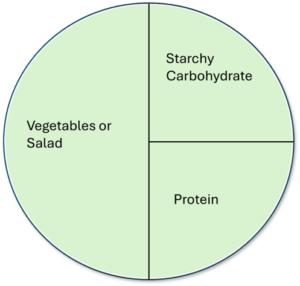
So that your meals are well balanced, providing your body with enough nutrition, as well as keeping your blood glucose levels in target, try to include 3 food groups on your plate.
Starchy carbohydrate
Aim for one quarter to one third of your plate being these foods and try to choose wholegrains where possible. Ideally, aim for meals to contain a similar amount of carbohydrate day to day as this will help to keep your blood glucose levels steady.
- The larger the portion size of carbohydrates that are eaten, the higher the blood glucose will rise.
Protein
- Aim for one quarter to one third of your plate being these foods and remember to use healthier cooking methods (grilling, poaching, steaming) and keep your meat lean (trim off the visible fat).
Vegetables or salad
- Aim for one third to half of your plate being vegetables or salad.
- Your plate should look similar to the one below:
- If you are not eating vegetables or salad on a regular basis, try to work on gradually increasing them in your diet. Vegetables can be fresh, frozen or tinned.
Dessert ideas
Swapping to a healthier or lower carbohydrate dessert will also help your diabetes.
Here are some ideas:
- 1 portion of fruit
- lower sugar yoghurt fruit yoghurt (Ski light, Danone light and free, Muller light, Activia 0% fat, Yeo Valley no refined sugar) or Greek or natural plain yoghurt
- sugar free jelly
- no added sugar Angel Delight
- 3 wheat based crackers with low fat soft cheese
- 1 chocolate mini roll
- 1 mini ice-cream on a stick
Having a dessert straight after your meal is better than having it on an empty stomach between meals or in the evenings before bed. The main meal will help to release the glucose more slowly from the dessert. On an empty stomach, the glucose releases quickly giving a more sharp rise in your blood glucose levels.
Snacks
If you are hungry in between a meal, you may want to have a snack. Some healthy snack options are listed below that are also suitable for diabetes and won’t raise your blood glucose levels before your next meal:
- 2 Ryvita and cheese
- Lower sugar yoghurt 125g pot
- 1 slice seeded bread with peanut butter or cheese
- 1 fruit portion
- Small handful of unsalted mixed nuts (30g)
- Sliced cooked chicken breast
- Vegetable sticks and hummus or soft cheese
- Boiled egg
- Cooked prawns
If you need further support with food and diabetes, you can ask your GP to refer you to a dietitian.