

Skip to content
Leeds Community Healthcare NHS Trust Logo
Careers Contact Us
  • Home
  • Our services (A to Z)
  • About us
    • Access to information
    • Equality and diversity
    • Research
    • Awards
    • Infection prevention and control
    • Clinical and medical education and training
    • Board of directors
    • Working in partnership
    • Safeguarding children and adults
    • Charity
    • Sustainability
  • News
  • Join our team
    • Why work for us?
    • Flexible staff
    • Newly qualified graduates
    • Vacancies
    • Apprenticeships
    • Working and living in Leeds
  • Patient experience and engagement
    • Compliments, comments and complaints
    • Your feedback and experience
    • Person-centred care
    • Get involved
    • Thinking about using a camera or other equipment to monitor someone’s care?
    • Help to access and attend your appointment
  • Contact us
    • Plan your journey
    • Location finder
    • Press and media enquiries
Skip to content
Leeds Community Healthcare NHS Trust Logo
  • Home
  • Our services (A to Z)
  • About us
    • Access to information
    • Equality and diversity
    • Research
    • Awards
    • Infection prevention and control
    • Clinical and medical education and training
    • Board of directors
    • Working in partnership
    • Safeguarding children and adults
    • Charity
    • Sustainability
  • News
  • Join our team
    • Why work for us?
    • Flexible staff
    • Newly qualified graduates
    • Vacancies
    • Apprenticeships
    • Working and living in Leeds
  • Patient experience and engagement
    • Compliments, comments and complaints
    • Your feedback and experience
    • Person-centred care
    • Get involved
    • Thinking about using a camera or other equipment to monitor someone’s care?
    • Help to access and attend your appointment
  • Contact us
    • Plan your journey
    • Location finder
    • Press and media enquiries
Leeds Community Healthcare NHS Trust Logo
/Our services (A to Z)/Musculoskeletal (MSK)/Elbow problems/Cubital tunnel syndrome

About cubital tunnel syndrome

What is cubital tunnel syndrome?

Cubital tunnel syndrome is a nerve entrapment at the elbow which can cause symptoms in the arm and hand including pain, numbness, and muscle weakness, particularly in the fingers 4 and 5. In severe cases you might experience clawing of the fingers.
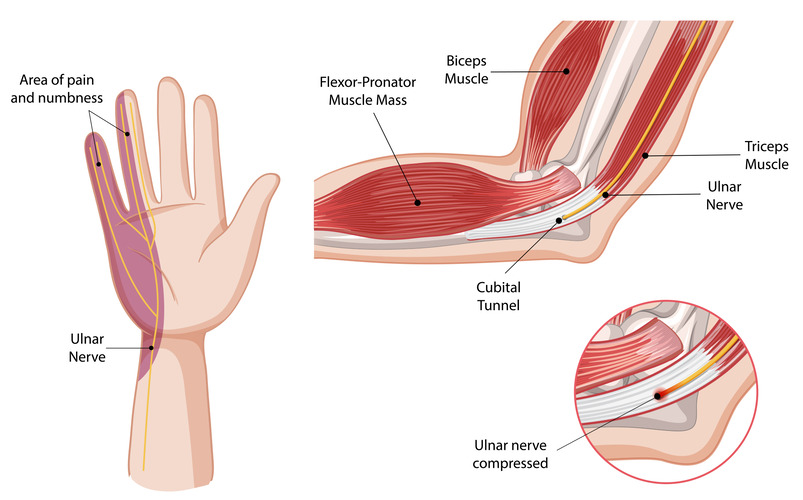
Diagram depicting the elbow and forearm muscles with labels, emphasizing the cubital tunnel structure.

The cubital tunnel is located in the elbow and is a small passage between the bones and tissue which the ulnar nerve passes through. The ulnar nerve supplies feeling and movement to the arm and hand and it runs from the neck to the shoulder, down the back of the arm, around the inside of the elbow and ends at the hand in the fourth and fifth fingers.

Due to the narrow opening of the cubital tunnel, it can be easily injured or compressed through repetitive activities or trauma.

What causes cubital tunnel syndrome?

Causes of nerve compression include daily habits like leaning on your elbows for long periods of time, sleeping with your elbows bent, or repetitive movement of the arm such as throwing. Direct trauma to the inside of the elbow, like when you hit your funny bone, can also cause symptoms of ulnar nerve pain.

Patients who have osteoarthritis of the elbow joint may develop bony spurs called osteophytes which may cause pressure on a nerve. Elbow fractures or dislocations or Ganglia (small fluid filled lumps) may also lead to nerve irritation.

How is cubital tunnel syndrome diagnosed?

Your physiotherapist will take a detailed history from you, about your pain followed by conducting a physical examination to diagnose cubital tunnel syndrome

Treatments for cubital tunnel syndrome

Conservative treatments to reduce pain include use of nonsteroidal anti-inflammatory medications (NSAIDs) like ibuprofen, heat and ice, bracing and splinting. Sleeping with a pillow or rolled up towel in the elbow to reduce elbow flexion may help alleviate symptoms. Avoid leaning on the elbow and modify repeated arm activities which aggravate your symptoms.
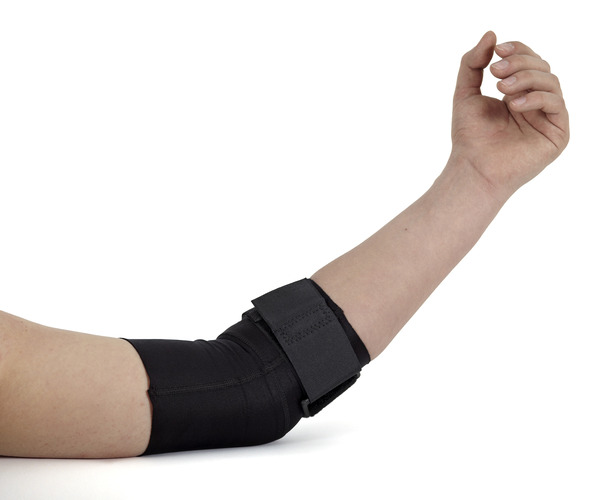
 A person wearing a black elbow brace, illustrating support for cubital tunnel syndrome.

Certain exercises like nerve gliding exercises for the arm and hand can also help decrease pain associated with cubital tunnel syndrome. Repeat these exercises once a day, three to five times per week, or as tolerated.

A woman performing an arm stretch, illustrating concepts related to cubital tunnel syndrome.

Watch the video on nerve pain and numbness surrounding the elbow:

If these activities cause an intense shooting pain, stop immediately and discuss with your physiotherapist. These exercises may cause a temporary tingling or numbness in the arm or hand. If this feeling persists after rest, discontinue and seek help.

Patients may be referred for nerve conduction studies in more severe cases and sometimes if cubital tunnel syndrome is not alleviated by conservative measures then surgery may be required to relieve pressure on the ulnar nerve.

Contact us

  • Phone: 0113 8431909
  • Opening hours: 8am to 3pm


getUBetter app: Help to manage your MSK symptoms

Contact us

  • Phone: 0113 8431909
  • Opening hours: 8am to 3pm


getUBetter app: Help to manage your MSK symptoms
survey icon
Tell us what you think

We would love to know what you think of our website and if there is anything we can improve.

Complete our survey and share your thoughts.

Leeds Community Healthcare NHS Trust Logo
Headquarters
Leeds Community Healthcare NHS Trust
White Rose Office Park, Building 3
Millshaw Park Lane
Leeds, LS11 0DL
Useful Links
  • News
  • Current vacancies
  • Contact us
  • Give feedback
Need to speak to someone urgently?
MindMate Website Logo MindWell Leeds Website Logo NHS 111 Logo
© 2025 Leeds Community Healthcare NHS Trust - Website by 6B
  • Accessibility statement
  • Privacy notice
  • Cookie policy
  • Terms and conditions
  • Policies and guidelines